
Hoe gezonder de thymus, hoe beter de overlevingskansen bij kankerimmunotherapie. Dat blijkt uit een studie van Nederlandse en Amerikaanse wetenschappers in het prestigieuze blad Nature.
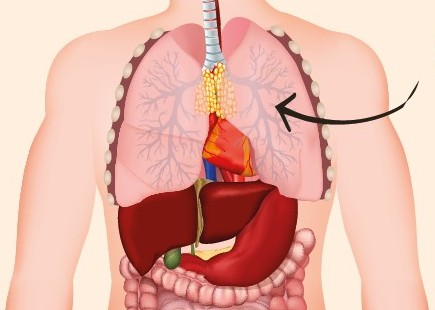
De gezondheid van de thymus heeft een sterke invloed op de overleving en de behandeluitkomst bij kankerimmunotherapie. Dat blijkt uit onderzoek van samenwerkende wetenschappers uit Maastricht en Boston. De onderzoekers maten de grootte, vorm en samenstelling van de thymus en bouwden deze om naar een ‘thymus-gezondheidsscore’.
Deze score werd vervolgens gelinkt aan een enorme berg data van ruim 27.000 mensen over een periode van twaalf jaar. Hieruit kwam een duidelijk beeld naar voren.
Personen met de hoogste, ten opzichte van de laagste, thymus gezondheidsscore hadden een 50% lager risico op overlijden, een 63% lager risico op overlijden aan hart- en vaatziekten en een 36% lager risico op het ontwikkelen van longkanker. In een tweede studie keken de onderzoekers naar data van bijna 3.500 mensen met kanker die waren behandeld met immunotherapie en/of chemotherapie. In een subgroep van 1.218 personen met longkanker hadden diegenen met de hoogste thymusgezondheidsscore een ongeveer 37% lagere kans op tumorprogressie en een 44% lagere kans op overlijden, ten opzichte van tegenhangers met de laagste score. Ook bij de 2.258 personen met andere tumoren (melanoom, nier, borst, blaas, slokdarm en andere organen) was de hoogste, ten opzichte van de laagste, thymusgezondheidsscore geassocieerd met een betere uitkomst van de immunotherapie.
De thymus is de opleider van immuun-elitetroepen
De thymus, ook wel zwezerik (en niet te verwarren met de schildklier), is een klein orgaan in de bovenste borstkas tussen de twee boven-kwabben van de longen. Het weegt bij jongvolwassenen zo’n 30 gram. De thymus fungeert als ‘klaslokaal’ waar T-cellen (‘immuuncellen uit de Thymus) worden opgeleid voor hun verscheidene functies in de immuunrespons. Belangrijke taken zijn om ziekteverwekkers (bacteriën, virussen, schimmels) en kankercellen te herkennen en deze vervolgens aan te vallen en te vernietigen. Tevens voorkomen ze dat onze eigen lichaamscellen worden aangevallen. T-cellen helpen eveneens andere immuuncellen bij hun werk. Zoals de B-cellen (van Bursa equivalent) die antilichamen maken. Bij mensen worden deze in het beenmerg ‘opgeleid’, maar ze hebben T-cellen nodig om dat te kunnen doen.
Met de leeftijd neemt de thymus in omvang en functie af. In plaats van de uitscheiding van 16 miljoen T-cellen per dag bij jongvolwassenen kan dit teruglopen naar minder dan een miljoen op 65 jarige leeftijd. De T-cellen die op oudere leeftijd verschijnen zijn minder goed toegerust om ongerechtigheden te herkennen. De achteruitgang van de thymus is een belangrijke factor in de veroudering van het immuunsysteem.
Mensen bij wie de thymus operatief verwijderd is, hebben een verhoogde kans op infecties, kanker, auto-immuunziektes en sterfte. Proefdieronderzoek toont overtuigend hoe belangrijk de thymus is voor het behoud van de gezondheid. Bij mensen speelt de veroudering van de thymus een mogelijke rol in de progressie van reumatoïde artritis.
De nieuwe studies leren ons twee belangrijke lessen. De auteurs verleggen de focus op de tumor naar meer aandacht voor een goed functionerend immuunsysteem. Laatstgenoemde voorspelde immers het slagen van de immuuntherapie. Ten tweede blijkt het verlies van de thymus gerelateerd aan leefstijl. Mogelijk is een achteruitgang vanwege een slechte leefstijl nog (deels) te herstellen, maar de nadruk ligt vooral op preventie. Eerdere studies linkten het verlies van de thymus aan tekorten aan zink, ijzer, magnesium en vitamine D. Belangrijke (micro)nutriënten voor het immuunsysteem zijn de vitamines A, B6, B12, C, D, E en foliumzuur en de (sporen)elementen, waaronder zink, ijzer, selenium, magnesium, koper, en de omega-3-visvetzuren eicosapentaeenzuur en docosahexaeenzuur. Tezamen vindt je deze vooral in de combinatie van voeding uit de zee met de planten en vruchten van het land. De keuze voor volwaardige voeding is ‘een must’ voor een optimaal immuunsysteem.
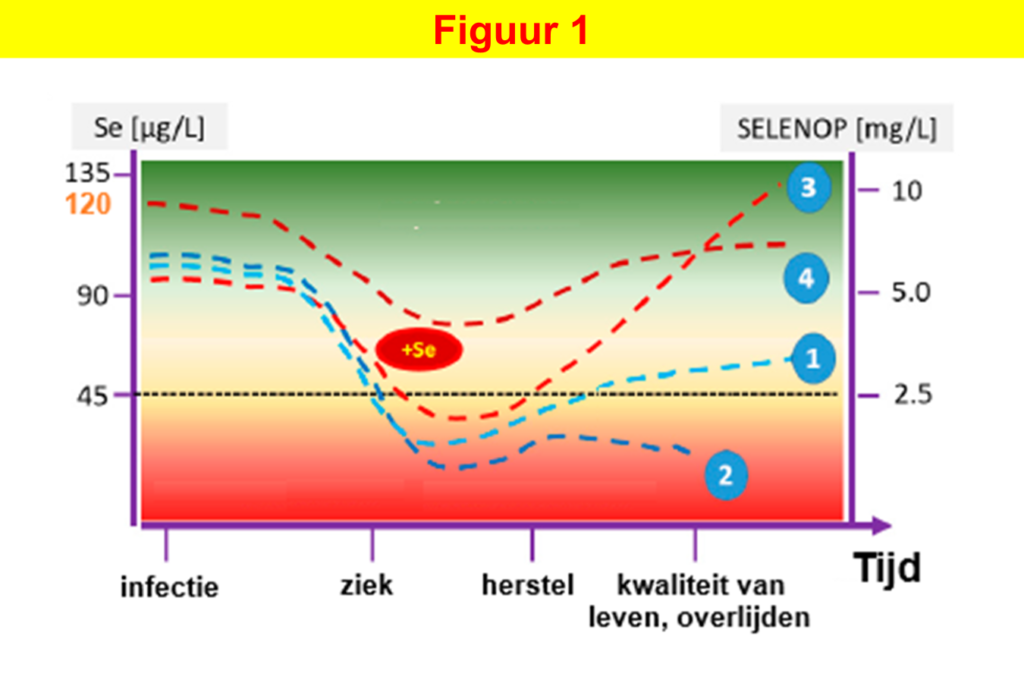
Figuur 1. Hypothetische consequenties van de daling van het plasma selenium (Se, in µg/L) en het plasma selenoproteïne P (SELENOP in mg/L) na een acute infectie in personen met een suboptimale- en optimale- seleniumstatus.
(1) Bij een (in de populatie gebruikelijke) suboptimale seleniumstatus is de ziekte-gerelateerde selenium-daling meestal van voorbijgaande aard en herstelt deze zich na verloop van tijd.
(2) Een fataal ziekteverloop was geassocieerd met een sterke daling van de seleniumstatus en het uitblijven van herstel.
(3) Een seleniumsupplement (+Se) dat wordt gegeven direct na de infectie, vermindert zowel het selenium-dal als de tijd die in een ernstig tekort wordt doorgebracht, waardoor de kans op herstel verbetert. Hierbij kan worden aangetekend dat selenium voor zijn werking in eiwitten moet worden ingebouwd en dat zo’n proces tijd vergt.
(4) Het risico om in de gevarenzone van een ernstig seleniumtekort te geraken, met falen van het immuunsysteem, wordt verminderd als de populatie een optimale seleniumstatus (120 µg/L) heeft.
Het Figuur is gemodificeerd naar een publicatie van Schomburg en medewerkers (30). Het werd door hen opgesteld op basis van hun waarnemingen tijdens de COVID-19 pandemie. Ter vergelijking: de plasma seleniumconcentratie (gemiddelde; range) in Nederlandse volwassenen bedraagt 85 (14-368) µg/L en ligt dus ver af van het 120 µg/L optimum (42,43).
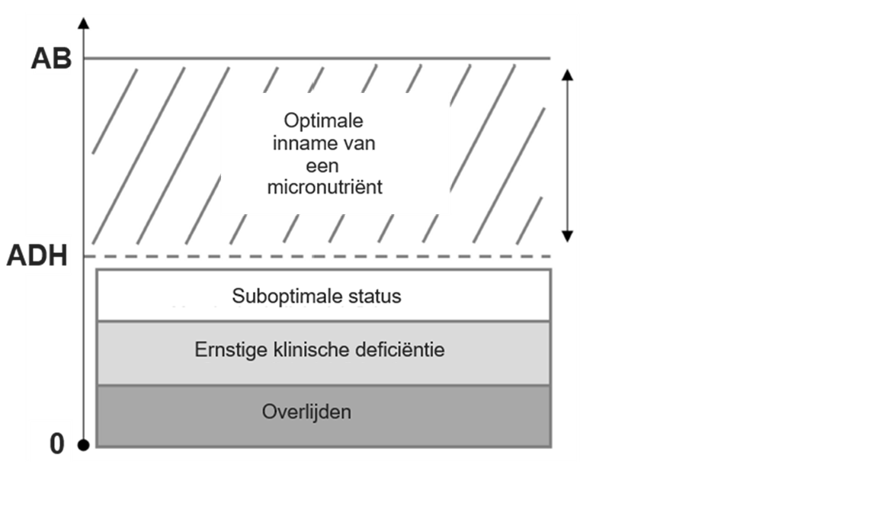
Figuur 2. Voor een optimale bescherming van het immuunsysteem, en voor weerstand tegen infecties, zouden de dagelijkse innames van diverse micronutriënten veel hoger moeten zijn dan de huidige Aanbevolen Dagelijkse Hoeveelheden (ADHs)
Het Figuur werd gemodificeerd naar een origineel van Gombart en medewerkers (19). AB=Absolute bovengrens
Thymus
1. Miller JFAP. The function of the thymus and its impact on modern medicine. Science. 2020 Jul 31;369(6503):eaba2429. doi: 10.1126/science.aba2429. PMID: 32732394.
https://pubmed.ncbi.nlm.nih.gov/32732394
Thymus involution, output and immune senescence
2. van den Broek T, Borghans JAM, van Wijk F. The full spectrum of human naive T cells. Nat Rev Immunol. 2018 Jun;18(6):363-373. doi: 10.1038/s41577-018-0001-y. PMID: 29520044.
https://pubmed.ncbi.nlm.nih.gov/29520044
3. Santamaria JC, Irla M. Age-related thymic involution: Mechanistic insights and rejuvenating approaches to restore immune function. Sci Adv. 2026 Feb 13;12(7):eaeb2970. doi: 10.1126/sciadv.aeb2970. Epub 2026 Feb 13. PMID: 41686895; PMCID: PMC12904209.
https://pubmed.ncbi.nlm.nih.gov/41686895
4. Elyahu Y, Monsonego A. Thymus involution sets the clock of the aging T-cell landscape: Implications for declined immunity and tissue repair. Ageing Res Rev. 2021 Jan;65:101231. doi: 10.1016/j.arr.2020.101231. Epub 2020 Nov 25. PMID: 33248315.
https://pubmed.ncbi.nlm.nih.gov/33248315
5. Luo M, Xu L, Qian Z, Sun X. Infection-Associated Thymic Atrophy. Front Immunol. 2021 May 25;12:652538. doi: 10.3389/fimmu.2021.652538. PMID: 34113341; PMCID: PMC8186317.
https://pubmed.ncbi.nlm.nih.gov/34113341
6. Liang Z, Dong X, Zhang Z, Zhang Q, Zhao Y. Age-related thymic involution: Mechanisms and functional impact. Aging Cell. 2022 Aug;21(8):e13671. doi: 10.1111/acel.13671. Epub 2022 Jul 12. PMID: 35822239; PMCID: PMC9381902.
https://pubmed.ncbi.nlm.nih.gov/35822239
7. Pawelec G, Bronikowski A, Cunnane SC, Ferrucci L, Franceschi C, Fülöp T, Gaudreau P, Gladyshev VN, Gonos ES, Gorbunova V, Kennedy BK, Larbi A, Lemaître JF, Liu GH, Maier AB, Morais JA, Nóbrega OT, Moskalev A, Rikkert MO, Seluanov A, Senior AM, Ukraintseva S, Vanhaelen Q, Witkowski J, Cohen AA. The conundrum of human immune system “senescence”. Mech Ageing Dev. 2020 Dec;192:111357. doi: 10.1016/j.mad.2020.111357. Epub 2020 Sep 17. PMID: 32949594; PMCID: PMC7494491.
https://pubmed.ncbi.nlm.nih.gov/32949594
8. Kooshesh KA, Foy BH, Sykes DB, Gustafsson K, Scadden DT. Health Consequences of Thymus Removal in Adults. N Engl J Med. 2023 Aug 3;389(5):406-417. doi: 10.1056/NEJMoa2302892. PMID: 37530823; PMCID: PMC10557034.
https://pubmed.ncbi.nlm.nih.gov/37530823
9. Plaza-Florido A, Carrera-Bastos P, Pérez-Prieto I, Fiuza-Luces C, Radom-Aizik S, Del Pozo Cruz B, Franceschi C, López-Soto A, López-Otín C, Lucia A. The long-lived immune system of centenarians. Nat Rev Immunol. 2026 Apr 23. doi: 10.1038/s41577-026-01291-5. Epub ahead of print. PMID: 42026253.
https://pubmed.ncbi.nlm.nih.gov/42026253
Thymus health and disease
10. Bernatz S, Prudente V, Pai S, Attermann AK, Cao Y, Chen J, Lyass A, Foldyna B, Nürnberg L, Bressem K, Abbosh C, Swanton C, Jamal-Hanjani M, Lu MT, Murabito JM, Lunetta KL, Birkbak NJ, Aerts HJWL. Thymic health consequences in adults. Nature. 2026 Apr;652(8111):986-994. doi: 10.1038/s41586-026-10242-y. Epub 2026 Mar 18. PMID: 41851466; PMCID: PMC13102717.
https://pubmed.ncbi.nlm.nih.gov/41851466
11. Bernatz S, Prudente V, Pai S, Attermann AK, Di Federico A, Rowan A, Veeriah S, Dyrskjøt L, Nürnberg L, Alessi JV, Ott PA, Sharon E, Hackshaw A, McGranahan N, Abbosh C, Mak RH, Bitterman D, Awad M, Ricciuti B, Swanton C, Jamal-Hanjani M, Birkbak NJ, Aerts HJWL. Thymic health and immunotherapy outcomes in patients with cancer. Nature. 2026 Apr;652(8111):995-1003. doi: 10.1038/s41586-026-10243-x. Epub 2026 Mar 18. PMID: 41851467; PMCID: PMC13102699.
https://pubmed.ncbi.nlm.nih.gov/41851467
12. Maastricht UMC+. Vergeten orgaan blijkt sleutel tot langere levensduur en kans op succesvolle kankerbehandeling 18 maart 2026
13. Lisa O’Mary. What We Thought We Knew About the Thymus May Be Wrong, Medscape March 30, 2026
https://www.medscape.com/viewarticle/what-we-thought-we-knew-about-thymus-may-be-wrong-2026a10009m7
14. Jackie Flynn Mogensen edited by Claire Cameron. This overlooked organ may be more vital for longevity than scientists realized. The role of the thymus in our long-term immunity and health is poorly understood. Two new studies suggest we need to pay attention. Scientific American
15. The Harvard Gazette. Thymus may be critical to adult health. Research indicates often-overlooked organ can be key predictor in longevity, disease risk, cancer treatment outcomes. Mass General Brigham Communications March 18, 2026
Thymus as lymphoid and endocrine organ
16. Csaba G. The Immunoendocrine Thymus as a Pacemaker of Lifespan. Acta Microbiol Immunol Hung. 2016 Jun;63(2):139-58. doi: 10.1556/030.63.2016.2.1. PMID: 27352969.
https://pubmed.ncbi.nlm.nih.gov/27352969
Nutrient needs of the immune system
17. Straub RH, Cutolo M, Buttgereit F, Pongratz G. Energy regulation and neuroendocrine-immune control in chronic inflammatory diseases. J Intern Med. 2010 Jun;267(6):543-60. doi: 10.1111/j.1365-2796.2010.02218.x. Epub 2010 Jan 28. PMID: 20210843.
https://pubmed.ncbi.nlm.nih.gov/20210843
18. Segerstrom SC. Stress, Energy, and Immunity: An Ecological View. Curr Dir Psychol Sci. 2007;16(6):326-330. doi: 10.1111/j.1467-8721.2007.00522.x. PMID: 18645630; PMCID: PMC2475648.
https://pubmed.ncbi.nlm.nih.gov/18645630
19. Gombart AF, Pierre A, Maggini S. A Review of Micronutrients and the Immune System-Working in Harmony to Reduce the Risk of Infection. Nutrients. 2020 Jan 16;12(1):236. doi: 10.3390/nu12010236. PMID: 31963293; PMCID: PMC7019735.
https://pubmed.ncbi.nlm.nih.gov/31963293
20. Calder PC, Carr AC, Gombart AF, Eggersdorfer M. Optimal Nutritional Status for a Well-Functioning Immune System Is an Important Factor to Protect against Viral Infections. Nutrients. 2020 Apr 23;12(4):1181. doi: 10.3390/nu12041181. PMID: 32340216; PMCID: PMC7230749.
https://pubmed.ncbi.nlm.nih.gov/32340216
Serum (micro)nutrients following acute inflammation
21. Cousins RJ, Leinart AS. Tissue-specific regulation of zinc metabolism and metallothionein genes by interleukin 1. FASEB J. 1988 Oct;2(13):2884-90. doi: 10.1096/fasebj.2.13.2458983. PMID: 2458983.
https://pubmed.ncbi.nlm.nih.gov/2458983
22. Fraser WD, Taggart DP, Fell GS, Lyon TD, Wheatley D, Garden OJ, Shenkin A. Changes in iron, zinc, and copper concentrations in serum and in their binding to transport proteins after cholecystectomy and cardiac surgery. Clin Chem. 1989 Nov;35(11):2243-7. PMID: 2582624.
https://pubmed.ncbi.nlm.nih.gov/2582624
23. Hennet T, Peterhans E, Stocker R. Alterations in antioxidant defences in lung and liver of mice infected with influenza A virus. J Gen Virol. 1992 Jan;73 ( Pt 1):39-46. doi: 10.1099/0022-1317-73-1-39. PMID: 1530963.
https://pubmed.ncbi.nlm.nih.gov/1530963
24. Gaetke LM, McClain CJ, Talwalkar RT, Shedlofsky SI. Effects of endotoxin on zinc metabolism in human volunteers. Am J Physiol. 1997 Jun;272(6 Pt 1):E952-6. doi: 10.1152/ajpendo.1997.272.6.E952. PMID: 9227437.
https://pubmed.ncbi.nlm.nih.gov/9227437
25. Oakes EJ, Lyon TD, Duncan A, Gray A, Talwar D, O’Reilly DS. Acute inflammatory response does not affect erythrocyte concentrations of copper, zinc and selenium. Clin Nutr. 2008 Feb;27(1):115-20. doi: 10.1016/j.clnu.2007.10.003. Epub 2007 Nov 26. PMID: 18037540.
https://pubmed.ncbi.nlm.nih.gov/18037540
26. Reid D, Toole BJ, Knox S, Talwar D, Harten J, O’Reilly DS, Blackwell S, Kinsella J, McMillan DC, Wallace AM. The relation between acute changes in the systemic inflammatory response and plasma 25-hydroxyvitamin D concentrations after elective knee arthroplasty. Am J Clin Nutr. 2011 May;93(5):1006-11. doi: 10.3945/ajcn.110.008490. Epub 2011 Mar 16. PMID: 21411617.
https://pubmed.ncbi.nlm.nih.gov/21411617
27. Foster M, Samman S. Zinc and regulation of inflammatory cytokines: implications for cardiometabolic disease. Nutrients. 2012 Jul;4(7):676-94. doi: 10.3390/nu4070676. Epub 2012 Jul 4. PMID: 22852057; PMCID: PMC3407988.
https://pubmed.ncbi.nlm.nih.gov/22852057
28. Zemrani B, McCallum Z, Bines JE. Trace Element Provision in Parenteral Nutrition in Children: One Size Does Not Fit All. Nutrients. 2018 Nov 21;10(11):1819. doi: 10.3390/nu10111819. PMID: 30469420; PMCID: PMC6266164.
https://pubmed.ncbi.nlm.nih.gov/30469420
29. Antonelli M, Kushner I. Low Serum Levels of 25-Hydroxyvitamin D Accompany Severe COVID-19 Because it is a Negative Acute Phase Reactant. Am J Med Sci. 2021 Sep;362(3):333-335. doi: 10.1016/j.amjms.2021.06.005. Epub 2021 Jun 22. PMID: 34166653; PMCID: PMC8216860.
https://pubmed.ncbi.nlm.nih.gov/34166653
30. Schomburg L. Selenium Deficiency Due to Diet, Pregnancy, Severe Illness, or COVID-19-A Preventable Trigger for Autoimmune Disease. Int J Mol Sci. 2021 Aug 8;22(16):8532. doi: 10.3390/ijms22168532. PMID: 34445238; PMCID: PMC8395178.
https://pubmed.ncbi.nlm.nih.gov/34445238
31. Barassi A, Pezzilli R, Mondoni M, Rinaldo RF, Davì M, Cozzolino M, Melzi D’Eril G, Centanni S. Vitamin D in SARS-CoV-2 patients with non-invasive ventilation support. Panminerva Med. 2023 Mar;65(1):23-29. doi: 10.23736/S0031-0808.21.04277-4. Epub 2021 Jan 25. PMID: 33494567.
https://pubmed.ncbi.nlm.nih.gov/33494567
Voedingsnormen, Schijf van Vijf
32. The habitual micronutrient intake of Dutch adults (VCP 2007-2010) compared with dietary reference values set by the Health Council of the Netherlands (2014) and EFSA (2010-2017)
https://www.rivm.nl/sites/default/files/2018-11/Memo_habitualmicronutintakeVCP0710_vs1.pdf
33. Health Council of the Netherlands. (2018). An. Evaluation of the EFSA’s Dietary Reference Values (DRVs), Part 1.
34. Standing Committee on the Scientific Evaluation of Dietary Reference Intakes, Subcommittee on Interpretation, Uses of Dietary Reference Intakes, Subcommittee on Upper Reference Levels of Nutrients, Panel on Dietary Antioxidants, & Related Compounds. (2000). Dietary reference intakes for vitamin C, vitamin E, selenium, and carotenoids. National Academies Press.
https://www.ncbi.nlm.nih.gov/books/NBK225483/pdf/Bookshelf_NBK225483.pdf
35. EFSA Panel on Dietetic Products, Nutrition and Allergies (NDA). (2013). Scientific opinion on dietary reference values for vitamin C. EFSA Journal, 11(11), 3418.
https://efsa.onlinelibrary.wiley.com/doi/abs/10.2903/j.efsa.2013.3418
36. Levine M, Wang Y, Padayatty SJ, Morrow J. A new recommended dietary allowance of vitamin C for healthy young women. Proc Natl Acad Sci U S A. 2001 Aug 14;98(17):9842-6. doi: 10.1073/pnas.171318198. PMID: 11504949; PMCID: PMC55540.
https://pubmed.ncbi.nlm.nih.gov/11504949
37. Padayatty SJ, Levine M. Vitamin C: the known and the unknown and Goldilocks. Oral Dis. 2016 Sep;22(6):463-93. doi: 10.1111/odi.12446. Epub 2016 Apr 14. PMID: 26808119; PMCID: PMC4959991.
https://pubmed.ncbi.nlm.nih.gov/26808119
38. Carr AC, Lykkesfeldt J. Discrepancies in global vitamin C recommendations: a review of RDA criteria and underlying health perspectives. Crit Rev Food Sci Nutr. 2021;61(5):742-755. doi: 10.1080/10408398.2020.1744513. Epub 2020 Mar 30. PMID: 32223303.
https://pubmed.ncbi.nlm.nih.gov/32223303
39. Carr AC, Rosengrave PC, Bayer S, Chambers S, Mehrtens J, Shaw GM. Hypovitaminosis C and vitamin C deficiency in critically ill patients despite recommended enteral and parenteral intakes. Crit Care. 2017 Dec 11;21(1):300. doi: 10.1186/s13054-017-1891-y. PMID: 29228951; PMCID: PMC5725835.
https://pubmed.ncbi.nlm.nih.gov/29228951
40. Muskiet FAJ, Schaafsma G. Waarom zijn groente en fruit gezond deel 2. Voedingsgeneeskunde 2025;26(1)34-44
https://voedingsgeneeskunde.nl/artikel/vg-2025-1/waarom-zijn-groente-fruit-gezond-deel-2
41. Muskiet FAJ. Eet volgens de Schijf van Vijf en neem er een supplement bij, MMV website 21 april 2026
https://www.mmv.nl/nieuws/eet-volgens-de-schijf-van-vijf-en-neem-er-een-supplement-bij
42. Al-Mubarak AA, Grote Beverborg N, Suthahar N, Gansevoort RT, Bakker SJL, Touw DJ, de Boer RA, van der Meer P, Bomer N. High selenium levels associate with reduced risk of mortality and new-onset heart failure: data from PREVEND. Eur J Heart Fail. 2022 Feb;24(2):299-307. doi: 10.1002/ejhf.2405. Epub 2022 Jan 2. PMID: 34931411; PMCID: PMC9302111.
https://pubmed.ncbi.nlm.nih.gov/34931411
43. Muskiet FAJ, Schaafsma G, Dijck-Brouwer DAJ. Nederland is nu ook officieel selenium deficiënt. Voedingsgeneeskunde 6-2023, 70-71
https://www.voedingsgeneeskunde.nl/vg-24-6/nederland-nu-ook-officieel-seleniumdefici%C3%ABnt
MMV maakt wekelijks een selectie uit het nieuws over voeding en leefstijl in relatie tot kanker en andere medische condities.
Inschrijven nieuwsbrief